blog.hero.title
blog.hero.description
blog.heroCard.title
blog.heroCard.description
blog.latestPosts.title
blog.latestPosts.description
Coffee Prices in Egypt in 2026: Why Wholesale Prices Move Differently from Global Markets
Coffee Prices in Egypt in 2026: Why Wholesale Prices Move Differently from Global Markets
If you buy coffee for a café, hotel or restaurant, 2026 has delivered a confusing message. Headlines say global coffee prices have fallen, yet the invoice from your supplier has not dropped by the same amount. Understanding coffee prices in Egypt means looking at what sits between a futures screen in New York and a kilogram on your storeroom shelf. This article explains why local wholesale prices move at a different speed, what relief is realistic, and how buyers can plan around it.What Has Happened to Global Coffee PricesGlobal prices have come down from their peak. Arabica futures traded around 2.95 dollars per pound in early October 2026, according to Trading Economics, while a year earlier they were close to 4 dollars per pound. That is roughly a quarter lower.The main reason is supply. Brazil is expected to harvest a very large crop in 2026/27, with one trading firm projecting a record 75.9 million bags, and Brazilian exports reached a record 4.155 million bags in August. Certified stocks on the exchange had been historically tight, so prices still react sharply to news about crop quality, and they can rise as quickly as they fall.For a buyer in Egypt, the lesson is that the global price is a direction, not a quote.Why Wholesale Coffee Prices in Egypt Move DifferentlyEgypt does not grow coffee commercially. Roasters buy green coffee from producing countries, so every local price is built on imports. Several things sit between the world price and your supplier’s price list:Currency. Green coffee is bought in dollars. If the Egyptian pound weakens, a falling dollar price can arrive at the roaster as a flat or higher pound price.Shipping and logistics. Freight, port handling and delays add cost that does not follow the futures market.Stock bought earlier. A roaster holding green coffee purchased at higher prices has to sell through it first. Cheaper coffee arrives later in the price list than in the headlines.Local green coffee pricing. A trade source interviewed by EnterpriseAM describes an internal pricing dynamic for green coffee in Egypt that is separate from global indices. When global prices fall sharply, local suppliers may hold inventory instead of selling at a loss, which can keep local prices firm even as benchmarks fall.Other costs in the cup. Packaging, labor, energy and transport also sit in a wholesale price, and none of them fell with the coffee market.Prices also had a long run of increases before the recent easing. Egypt Independent reported that the value of coffee imports in the first quarter of 2026 reached about 89 million dollars despite lower volumes, which shows how much of the bill was price rather than quantity.How Much Relief Is RealisticThe same EnterpriseAM source suggests that a 10 to 20 percent global drop might translate into roughly 6 to 8 percent relief at the wholesale level once currency, local market dynamics and supply chain factors are included. Treat this as one expert’s estimate, not a forecast. It does give a useful rule of thumb: local relief may be around 40 to 60 percent of the global move.Here is a hypothetical example, not a quoted price. Suppose your café pays 400 EGP per kilogram of coffee:A 6 percent reduction saves 400 × 0.06 = 24 EGP per kilogram.An 8 percent reduction saves 400 × 0.08 = 32 EGP per kilogram.If the café uses 50 kg a month, that is 1,200 to 1,600 EGP a month.That is meaningful, but it is not the 25 percent drop a headline might suggest.What It Means for Your Cost per CupCoffee is only one part of what a drink costs, so the saving per cup is small. Using the same hypothetical 400 EGP per kilogram and an 18 g double espresso:Coffee cost today: 18 × 400 ÷ 1,000 = 7.2 EGP per drink.After a 6 percent reduction: about 6.77 EGP.After an 8 percent reduction: about 6.62 EGP.The difference is about 0.43 to 0.58 EGP per drink. At volume, it adds up, but it will not by itself justify changing menu prices. Our guide to calculating coffee cost per cup shows how to do the full calculation for your own drinks, including milk, cups, and labor.Five Ways to Manage Price UncertaintyCompare total cost, not the sticker price per kilogram. Yield, consistency, and waste change what a kilogram really costs you.Ask what drives each price change. A supplier who can explain currency, freight, and stock effects is easier to plan with than one who only sends a new list.Agree on a review rhythm. Fixed prices for a defined period, with a scheduled review, give both sides certainty. Avoid reacting to every headline.Order from real consumption data. Buying much more than you use to “lock in” a price risks stale coffee. The method in our guide to how much coffee a business needs helps you size orders to your own demand.Be cautious with very low quotes. A price far below the market deserves questions about what is in the bag and how it was produced.Questions to Ask Your Coffee Supplier About PricingHow are your prices set, and how often do they change?How quickly do changes in green coffee costs reach my price, in both directions?Can prices be held for an agreed period, and what triggers a review?Do volume tiers apply, and at what quantities?Are packaging and delivery included?Businesses that want to compare range and volumes can review the coffee products and contact Yemeni Cafe to discuss a quote based on their own usage.FAQsWhy are coffee prices in Egypt still high when global prices fall?Local prices depend on imported green coffee, the exchange rate, shipping costs, stock bought earlier at higher prices, and local supplier behavior. These factors mean global declines reach wholesale prices only partly and with a delay.How much cheaper could wholesale coffee become in Egypt?One trade source quoted by EnterpriseAM suggests a 10 to 20 percent global drop might bring about 6 to 8 percent relief at the wholesale level. This is an estimate, and actual prices depend on currency, logistics, and each supplier’s stock.How often should a café review its coffee price?A scheduled review every few months, based on your consumption and your supplier’s price history, is more useful than reacting to each market headline.
 NaN day ago
 3 days ago
Private Label Coffee: How to Build Your Own Coffee Brand
Private Label Coffee: How to Build Your Own Coffee Brand
Private label coffee lets a business sell coffee under its own name without owning a roastery. The coffee is produced by an experienced partner, while the brand, the positioning, and the customer relationship stay with you. For retailers, hospitality groups, and entrepreneurs who want to start their own coffee brand, it is often the fastest route from idea to shelf, but only if the project is planned like a product launch and not like a packaging exercise. This guide walks through the decisions that matter, in the order they come up.What Private Label Coffee Is, and What It Is NotWith private label coffee, one company produces the coffee, and another company sells it under its own brand. The brand owner decides the name, the look, the price, and the customers. The producer handles roasting and packing to the agreed specification.It helps to separate it from three things people often confuse it with:Reselling a supplier’s branded coffee. Here the supplier’s name is on the bag. Nothing about the product is yours.Running your own roastery. That means buying equipment, hiring roasters and managing green coffee yourself. Private label avoids that investment.A one-off custom batch. A blend made for a single event is not a brand. A brand needs the same coffee, in the same pack, every time you reorder.Who Builds a Private Label Coffee BrandThe model suits several kinds of business:Retailers who want a coffee line with their own name and better control of the rangeCafés and restaurants that sell bags to take homeHotels and hospitality groups that want a signature coffee guests recognizeEntrepreneurs entering the market with a new productDistributors who want a brand they own rather than one they carry for othersThe common thread is that each wants a product that is unmistakably theirs, backed by a producer that can deliver it consistently.Step 1: Define the Brand and Its CustomerBefore you talk to any producer, write down who the coffee is for. A short positioning statement is enough: who buys it, where they buy it, what they pay for similar coffee today, and why they would choose yours.These questions shape everything that follows:Is the coffee for retail shelves, for café service, for hotel rooms, or for gifting?Which price tier are you aiming at?What will the name and design promise, and can the coffee keep that promise?Which formats will you sell first? Resist the temptation to launch many.Coffee branding works best when the product and the story match. A bold, traditional blend with a heritage story is easy to explain. A blend that tastes ordinary under a premium design is hard to defend.Step 2: Develop the CoffeeThis is where private label coffee becomes a real product. The goal is a blend and a roast that fit your customer, and that can be reproduced batch after batch.A sound development process looks like this:Write a taste brief in plain words: how the coffee should smell, taste and feel, and which drinks it must work in.Review samples from the producer and compare them blind against the coffee your customer buys now.Test the favorite samples the way customers will use them, for example as Turkish-style coffee, filter or espresso.Approve one reference sample and keep a sealed copy.Agree how future batches will be compared with that reference.If you need a profile of your own rather than a standard product, our guide on how businesses customize a coffee blend (see Tawleftak) explains how type and roast become a written specification. You can also review the existing range on the coffee products page to see where your brand could sit.Step 3: Plan Packaging and LabelingPackaging does two jobs. It sells the coffee on the shelf, and it protects the coffee until the customer opens it. A beautiful pack that lets air in will damage the product you worked so hard to develop.Work through these points with your production partner:Which pack formats suit your channel, and which sizes will your customers actually buy?Which materials protect the coffee, and how long can it be sold with confidence?What must the label show? Food products in Egypt fall under the oversight of the Egyptian Food Safety Authority, so confirm labeling requirements before you finalize artwork.Who prints, who fills, and who checks the date coding?Do not assume pack sizes, minimum quantities or lead times. Ask for them in writing, because they differ between producers and between products.Step 4: Cost and Price the ProductMany new brands set a shelf price first and discover the margin later. Reverse the order.Margin % = (selling price − cost per unit) ÷ selling price × 100Here is a hypothetical example, not a quoted price. Suppose a 250 g bag costs you 120 EGP delivered, including coffee, packaging and labeling. If you sell it to consumers at 220 EGP, your margin is (220 − 120) ÷ 220 × 100 = about 45%. If you instead sell it wholesale to a retailer at 165 EGP, your margin is (165 − 120) ÷ 165 × 100 = about 27%. The product is the same, but the business is different.This is why you should decide your channel before you decide your price. Our guide to calculating coffee cost per cup shows the same logic applied to drinks, which helps if your brand will also serve cafés.Step 5: Plan Supply and LaunchA launch that sells out in week three and then runs dry damages a young brand. Plan the supply side before you open orders.Estimate monthly volume by channel, using the method in our guide to how much coffee a business needs.Match order sizes to the freshness window, so you do not hold coffee longer than you can sell it.Agree a reorder rhythm with the producer, and what happens when demand rises faster than forecast.Start with a small range. Two or three strong products are easier to market than ten average ones.For hospitality groups that want a signature coffee across several outlets, the same planning applies. Our overview of coffee supply for hotels, restaurants and cafés covers the operational side.Questions to Ask a Production PartnerBefore you commit, get clear answers to these:How long has the company been roasting, and at what scale?Can you approve a reference sample, and how are later batches checked against it?Which quality and food safety documents can you see?Who owns the blend specification and the artwork?What are the terms for minimum quantities, lead times and payment?What happens if a batch does not match the agreed profile?Al-Yemeni Cafe Abdelmaboud has been grinding and roasting coffee since 1940, and the About Us page explains the company’s background. Businesses that want to discuss a private label project can contact the team with their positioning, expected volumes and target channel.Common Mistakes When You Start Your Own Coffee BrandDesigning the pack before the coffee is approvedChoosing a price without checking the margin in each channelLaunching too many products at onceHaving no reference sample, so quality drifts over timeOverlooking label requirements until artwork is already printedOrdering large volumes before the product has proven itselfFAQsWhat is private label coffee?Private label coffee is coffee produced by one company and sold under another company’s brand. The brand owner controls the name, design, price and customers, while the producer roasts and packs to the agreed specification.Do I need my own roastery to start a coffee brand?No. A private label model lets you build a brand around coffee made by an established producer, so you do not need to buy roasting equipment or manage green coffee yourself.What should I confirm before choosing a private label partner?Confirm how reference samples are approved, how batches are checked for consistency, which quality documents are available, and the written terms for minimum quantities, lead times and pack formats.
NaN day ago3 days ago
Customize Your Coffee Blend: How Businesses Can Create a Coffee Profile That Fits Their Needs
Customize Your Coffee Blend: How Businesses Can Create a Coffee Profile That Fits Their Needs
A custom coffee blend gives a business something a standard bag cannot: a cup that was designed for its menu. Instead of adjusting drinks to whatever coffee happens to be on the shelf, the café, restaurant or hotel decides what the coffee should taste like and works backwards from there. This guide shows how businesses build a coffee blend profile that fits their needs, from the first written brief to a documented recipe the whole team can repeat.What a Custom Coffee Blend Means for a BusinessA custom coffee blend is a coffee chosen to your own specification rather than picked from a fixed range. You set the direction, test the result in your own conditions and only then turn it into a standing order. Some people call it a personalized coffee mix, but for a business the label matters less than one word: "repeatable". The goal is a house coffee that tastes the same on a quiet Tuesday and on a packed Friday, in every outlet that serves it.This is a signature-blend decision. It sits next to your menu, your equipment and your cost targets, and it should be judged the same way.Why Build a Signature Blend Instead of Buying Off the ShelfFour business reasons come up most often.Menu fit. Your best-selling drinks decide what the coffee must do. A coffee that works well as a black filter can disappear inside a latte.Identity. A coffee guests cannot buy from the café next door becomes part of your brand.Consistency. One agreed profile removes guesswork when staff, shifts or suppliers change.Cost control. When you know the profile you need, you stop paying for qualities your menu never uses.A custom coffee blend for cafés pays off most when it starts from the menu rather than from general taste.Step 1: Write the Brief Before You Taste AnythingMost blend projects go wrong at the start, because people taste first and decide later. Write a one-page brief instead. It should answer these questions:Which five drinks make up most of your sales, and how many of them include milk or sugar?Which machines, grinders and brewing methods will actually be used?What cost per cup can your menu support?How much coffee will you use in a month?Who will brew it, and how much training do they have?What should guests say about the coffee? Simple words such as "smooth", "bold" or "rich with cardamom" are enough.Volume matters more than most people expect, because it decides how often you reorder and how fresh the coffee stays on your shelf. Our guide on how much coffee a café needs shows how to estimate it from daily drinks.Step 2: Choose the Building BlocksIf you want to build your own coffee blend, start with two decisions: the type of coffee and the degree of roasting. Those are exactly the two choices you make when you customize your coffee on Tawleftak, the custom blend tool on the Yemeni Cafe website. It is a practical way to move from a vague preference to a specific starting point.Three habits help at this stage.Start from your drinks. A milk-heavy menu and a menu of straight black coffee ask very different things of a blend.Use the existing range as a reference. Plain coffee comes in light, medium and dark, and the 10% cardamom line comes in the same three roasts, so you can compare them on the coffee products page before committing to a direction.Change one thing at a time. If you alter the coffee type and the roast together, you will not know which change did what.If your idea needs something the tool does not cover, such as a particular balance for a signature drink, describe it to the team instead of forcing it into the nearest option.Step 3: Test the Coffee in Your Own ConditionsBefore you commit to volume, taste the coffee the way you will serve it. A coffee that tastes excellent in a tasting room can disappoint behind your counter. If you would like to trial a smaller quantity first, ask the team what options are available.Brew on your own equipment, with your own water and your own grinder settings.Taste it black, and with milk if milk drinks matter on your menu.Involve at least three tasters, including the baristas who will make it every day.Compare it with your current coffee, ideally without telling people which is which.Score every round on the same short sheet: aroma, sweetness, body, bitterness, and aftertaste.If you want a more formal structure for scoring, the Specialty Coffee Association publishes official cupping standards. Whatever method you choose, record what changed between rounds. A blend you cannot reproduce is only a lucky batch.Step 4: Lock the Coffee Blend Profile and Document the RecipeOnce the team agrees on a result, turn it into a specification. Write down:The approved coffee type and roast degree, with a reference name or codeThe recipe for each main drink: dose, yield and extraction time for espresso, or ratio and method for other preparationsStorage and rotation rules for the storeroomWhat counts as an acceptable difference between deliveries, and who decides when a delivery looks or tastes offHow you will request a change laterKeep a sealed, labeled bag from the first delivery you approve as your reference. Comparing each new delivery with it is the simplest quality check a café can run.Work Out the Cost Before You CommitThe cost of a blend is easy to calculate and easy to forget. The formula is simple:Coffee cost per drink = dose in grams × price per kilogram ÷ 1,000Here is a hypothetical example, not a quoted price. Assume a double espresso uses 18 g of coffee and the blend costs 450 EGP per kilogram. The coffee cost is 18 × 450 ÷ 1,000 = 8.1 EGP per drink. If the café sells 400 of these drinks a day for 30 days, it makes 12,000 drinks and uses 12,000 × 18 g = 216 kg a month. That figure tells you how much storage you need and how often to reorder so the coffee stays fresh.Coffee is only one line in your costs, so check it against the full picture in our step-by-step guide to calculating coffee cost per cup.Common Mistakes When Customizing a BlendStarting without a brief, so there is no yardstick for judging resultsTesting only black coffee for a menu that is mostly milk drinksChanging several variables between roundsApproving a blend after one tasting and never documenting itOrdering more than the business can use before the coffee loses its freshnessTreating the blend as a novelty or gift idea instead of a menu decisionWhen to Use Tawleftak and When to Talk to the TeamTawleftak works well as a starting point, and for businesses that already know the direction they want. A conversation with the team makes more sense when you run several outlets, need a specific profile for a signature drink, or want to discuss volumes and delivery. You can contact Yemeni Cafe with your brief, your expected monthly volume and the drinks you plan to build around the blend.FAQsWhat is a custom coffee blend? A custom coffee blend is a coffee chosen to a business's own specification, usually by selecting the type of coffee and the degree of roasting, instead of buying a fixed product from a range.How much coffee do I need to order for a custom blend? Ask the team about quantities and delivery. Before that, estimate your own monthly use from daily drinks and dose, so the order matches what you can use while the coffee is fresh.How do I test a custom blend before ordering? Brew it on your own equipment, taste it black and with milk, involve several tasters including your baristas, and compare it with your current coffee using the same scoring sheet each time.
NaN day ago3 days ago
10% Cardamom Coffee: Benefits, Flavor, and How to Choose the Right Roast
10% Cardamom Coffee: Benefits, Flavor, and How to Choose the Right Roast
Cardamom coffee benefits are real in the cup and still uncertain in the lab, and a buyer should know the difference before writing either into a menu or a purchase order. 10% cardamom coffee is coffee blended with cardamom as a defined share of the mix, and Al-Yemeni Cafe Abdelmaboud offers it in light, medium, and dark roast. The roast you choose changes how much cardamom your guests taste, how the coffee behaves with sugar or milk, and how often they reorder it. This guide explains what the blend is, what research actually supports, and how to match a roast to your venue.What 10% cardamom coffee actually isThe name describes a ratio. Cardamom makes up 10% of the blend, and coffee makes up the rest. In a hypothetical 1 kg batch, that is 100 g of cardamom and 900 g of coffee.The products list 10% Cardamom Coffee next to other cardamom categories (Plus, Extra, and Royal), so the percentage is the first detail to confirm when you compare lines. A higher share of cardamom pushes the cup toward spice. A lower share keeps the coffee in front and lets the cardamom lift the aroma.The ratio also helps you plan quantities. Take a hypothetical dose of 7 g of blend per cup:Cardamom per cup: 7 g × 10% = 0.7 gCoffee per cup: 7 g × 90% = 6.3 gCups per kilogram: 1,000 g ÷ 7 g ≈ 143, so plan on about 140Your own dose will depend on your brewing method and cup size, so treat these numbers as a starting point for testing, not a specification.Cardamom coffee benefits: what holds up and what does notStart with what you can taste. Cardamom adds a citrusy, slightly resinous aroma that softens the bitterness of a darker roast. That is why it has long been paired with Arabic-style coffee, and it is the first of the cardamom coffee benefits your guests will notice.Health claims need more care. A 2025 systematic review and meta-analysis in the Journal of Nutrition and Food Security pooled eight studies on cardamom intake. It found a lower serum insulin level but no significant change in fasting blood glucose, body weight or body mass index. Those studies tested cardamom as a supplement, not coffee blended with cardamom at 10%.For a café, hotel, or retailer, that leads to a clear rule for talking about cardamom coffee benefits:Safe to say: aromatic, traditional, balanced, and pairs well with dates and sweetsAvoid saying: burns fat, controls blood sugar, treats any conditionIn Egypt, food safety and licensing sit with the National Food Safety Authority, so check what you may print on packaging or menus before you publish a health claim. Guests with medical conditions should ask their doctor rather than rely on a menu.How roast level changes a cardamom blendCardamom and roast compete for the same part of the cup. The lighter the roast, the more aroma you notice. The darker the roast, the more body and bitterness you have to balance.Light roastA light roast keeps more of the coffee's own brightness, so the cardamom aroma is easy to identify and the cup feels lighter. It suits guests who drink coffee black and want something aromatic. The risk is a thin cup once milk is added.Medium roastA medium roast is the balanced option. Coffee body and cardamom aroma sit at a similar level, which makes it forgiving across different serving styles. For most venues with mixed guests, this is the sensible roast to trial first.Dark roastA dark roast gives a bolder body and a roasty edge. The cardamom works as a counterweight to that edge, which many guests who prefer strong, sweetened coffee enjoy. The trade-off is that the cardamom can sit further back in the cup.How to choose the right roast for your businessMatch the roast to who is drinking and how the coffee is served, not to your own taste.Guest profile. Traditional Arabic coffee drinkers usually lean toward medium or dark. Hotel guests from different markets may prefer a milder medium, so check against your own guest feedback.Serving style. Black, with sugar, or with milk, each pulls the cup in a different direction. Taste the roast the way you will serve it.Volume and rotation. A venue that sells many cups a day can run one roast and rotate it quickly. A smaller one may need a single, versatile roast to avoid stock that sits. Our guide to how much coffee a café needs shows how to estimate this.Consistency across branches. Pick one roast per product line and standardize the dose so the cup tastes the same in every outlet.If a retail shelf is the goal, a medium roast is a reasonable first trial, and a dark roast can follow once you see repeat demand. If none of the three fits, the Tawleftak page lets you choose the coffee type and the roasting degree yourself. For a wider view of supplying a hotel, restaurant, or café, see the coffee supply guide for HORECA.A simple way to test before you commitRequest all three roasts of the 10% line.Brew each one with the same method, dose, and water.Taste each black first, then with the sugar or milk you normally serve.Ask 10 regular guests or staff to rank aroma, balance, and aftertaste.Compare cost per cup, not only price per kilogram.The cost step is simple arithmetic. Using a hypothetical price of EGP 600 per kg and 140 cups per kg, the coffee cost is 600 ÷ 140 ≈ EGP 4.29 per cup, before sugar, milk, and packaging. Our cost per cup guide covers the full calculation.Common mistakes when buying cardamom coffeeChoosing one roast for every guest. A single roast rarely fits both black-coffee drinkers and sweetened, milk-based orders.Judging only Black. If most guests add sugar or milk, test it that way.Treating a higher cardamom share as higher quality. More spice is a style choice, not a quality grade.Over-promising on health. The research on cardamom coffee benefits is limited, so keep claims to flavor and tradition.Ignoring storage. Keep opened packs sealed and away from heat and light so the aroma lasts through the shelf life.To compare the roasts side by side, start with the 10% cardamom coffee range or contact the team with your expected volume.
NaN day ago5 days ago
How to Spot Adulterated Coffee: A Buyer's Checklist for Cafés, Hotels, and Restaurants
How to Spot Adulterated Coffee: A Buyer's Checklist for Cafés, Hotels, and Restaurants
Coffee quality affects more than the taste of a cup. For cafés, hotels, restaurants, and other food-service businesses, it influences customer satisfaction, product consistency, purchasing decisions, and brand reputation. When a coffee shipment does not match the agreed specification, the effects can show up in the aroma, flavour, brewing performance, and consistency of the final drink.One concern buyers should understand is coffee adulteration, which occurs when coffee is mixed with undeclared ingredients or other materials, or when a product is presented in a way that misrepresents its actual composition. The challenge is that unusual colour, aroma, taste, or brewing behaviour does not automatically prove adulteration. Roast level, freshness, storage, grinding, water quality, and preparation methods can produce similar differences.For professional buyers, the safest approach combines sensory assessment, documented purchasing specifications, supplier checks, and laboratory testing when necessary. This guide explains what to look for and how to respond to a suspicious coffee sample without relying on unreliable home tests.What Is Adulterated Coffee?Adulterated coffee is coffee whose composition has been altered in a way that is not properly disclosed to the buyer. Depending on the product and the circumstances, this may involve the addition of undeclared roasted plant materials, grains, or other substances, or the misrepresentation of a coffee blend.Not every coffee blend is adulterated. Blending different coffee origins or combining coffee with declared ingredients can be a legitimate product choice when the composition is accurately described and applicable requirements are met.The key issue is transparency. A product should match its label, description, purchase agreement, and applicable food regulations.For businesses purchasing coffee regularly, understanding the difference between a declared blend and an undisclosed addition is an important part of quality control.Why Coffee Adulteration Matters to Food-Service BusinessesA café or hotel depends on repeatable results. The same logic applies to coffee supply for cafés, hotels and restaurants: consistency starts with the specification. If a coffee delivery differs from the approved sample, the business may struggle to maintain the same flavour profile across drinks and shifts.Potential consequences include:Inconsistent flavour: The aroma, bitterness, body, or aftertaste may differ from the expected profile.Unpredictable brewing performance: A product may behave differently during extraction, although grinder settings, water temperature, and equipment condition can also be responsible.Customer complaints: Guests may notice changes between visits or between drinks prepared by different staff members.Stock and cost issues: A low-cost product that fails to meet the agreed specification can create waste, complaints, and purchasing complications.Reputational risk: Customers generally associate the drink served with the business responsible for it, even when the problem originates with a supplier.Businesses can reduce these risks by defining their coffee requirements before ordering and comparing each new delivery against an approved reference sample.To see what a defined product range looks like, review the coffee products and note the specification you would require for each.Signs That a Coffee Sample Deserves Further InspectionNo single visual or sensory characteristic can reliably confirm adulteration. Instead, buyers should look for several unexplained differences between the delivered product and the agreed specification.1. Unusual AppearanceInspect the coffee under consistent lighting. Look for unexpected foreign particles, an inconsistent grind, or a noticeably different appearance compared with an approved sample of the same product.However, bean size, surface colour, and oiliness naturally vary according to origin, roast level, processing, and freshness. A dark roast, for example, may look oilier than a light roast. These differences should be assessed in context rather than treated as proof of adulteration.2. Unexpected AromaFreshly opened coffee should have an aroma broadly consistent with its origin, roast, and product description. An unfamiliar cereal-like, earthy, burnt, stale, or otherwise unexpected smell may justify closer inspection.Still, aroma is subjective. Poor storage, exposure to moisture, oxidation, contamination from nearby products, and excessive roasting can all affect the smell. Compare the suspect sample with a properly stored reference sample prepared under the same conditions.3. Unusual Taste or MouthfeelA sample that tastes significantly different from the approved product deserves investigation. Pay attention to unexpected flavours, an unusual aftertaste, or a marked difference in body.Before concluding that the coffee has been adulterated, check the preparation process. Incorrect grind size, unsuitable water, dirty equipment, and inconsistent brewing ratios can all change the cup.4. Inconsistent Brewing ResultsIf the same coffee produces noticeably different results from one delivery to another, record the difference and investigate. Compare the roast date where available, packaging condition, storage history, grind setting, water temperature, and brewing ratio.Crema, foam, colour, and extraction speed are not reliable standalone tests of coffee purity. They are influenced by several variables, including the coffee species, roast, freshness, grind, and brewing method.Can You Test Coffee at Home or at the Café?Simple observations can help identify samples that deserve closer attention, but they cannot reliably identify every adulterant or prove that a product is pure.The Cold-Water ObservationSome informal tests recommend placing coffee powder in cold water and observing how it behaves. This may reveal differences in settling, floating, or colour release, but the results are affected by grind size, roast level, particle density, and the composition of the coffee itself.Treat this method as an observation, not a definitive test. Do not reject a supplier or make a public accusation based only on what happens in a glass of water.Controlled Aroma and Taste ComparisonA controlled comparison is more useful for routine purchasing decisions.Keep an approved reference sample in appropriate storage.Prepare the reference and new sample using the same equipment, water, dose, grind setting, and brewing method.Compare aroma, flavour, body, aftertaste, and overall consistency.Record the results, including the delivery date, batch or lot number, and packaging details.Repeat the comparison if the difference is unclear.This process helps identify changes from the expected profile, but it still does not establish the chemical composition of a sample.When Laboratory Testing Is NecessaryIf the concern remains after controlled checks, seek advice from a qualified food-testing laboratory. Explain the suspected issue and provide the product label, supplier details, batch information, and a representative sample.The appropriate method depends on the suspected substance and the product's composition. A laboratory should select suitable tests rather than relying on a generic test for every possible adulterant.In Egypt, the General Organization for Export and Import Control (GOEIC) describes food-quality testing services that assess food properties and investigate commercial fraud in relevant product categories. Buyers should confirm directly which tests and services are available for their specific coffee sample.How to Verify a Coffee Supplier Before OrderingPreventive purchasing controls are more dependable than trying to identify every problem after a delivery arrives.1. Request a Representative SampleAsk for a sample of the same product you intend to purchase, with the same roast profile and declared composition. Evaluate it using a documented procedure before approving a larger order.Keep a retained reference sample where practical, with its product name, batch details, and approval date.2. Confirm the Product SpecificationRequest a written description that matches the product being sold. Depending on the arrangement, relevant details may include:Coffee type or blend description.Declared ingredients, where applicable.Roast level and intended application.Packaging format and net weight.Batch identification and production details, where available.Storage and handling recommendations.Do not assume every supplier must provide the same documents in every transaction. Requirements depend on the product, business relationship, and applicable regulations.3. Review Traceability and Supporting DocumentsAsk how the supplier identifies batches and handles quality complaints. This matters most when weighing buying directly from a manufacturer versus a distributor, because the number of hands between roaster and café affects how easily a batch can be traced. Depending on the transaction, useful records may include invoices, product specifications, batch information, food-safety documentation, and applicable test reports.Check that the documents refer to the product you are actually buying. A general certificate or a document for a different product does not automatically verify the composition of the delivered coffee.4. Assess Price in ContextA price substantially below comparable offers can justify additional questions, but price alone does not prove adulteration. Differences may reflect origin, grade, roast, packaging, order volume, logistics, or commercial terms.Compare quotations against equivalent product specifications and investigate unexplained inconsistencies before placing a large order.5. Assess the Supplier's Quality ProcessAsk how the supplier maintains consistency between batches, stores finished coffee, manages complaints, and investigates product discrepancies.For background on the company and its approach to coffee production, read its coffee story and learn more about the team. Use the same practical checks with any potential supplier, and base the final decision on the product specification and evidence available.A Coffee Receiving Checklist for Cafés, Hotels, and RestaurantsUse this checklist whenever a new shipment arrives:Confirm that the product name matches the purchase order.Check the packaging for damage, tampering, moisture, or unusual odours.Review batch details, dates, and labels where provided.Compare the delivery with the approved sample.Record any differences in aroma, appearance, taste, or brewing performance.Keep purchase and inspection records.Separate any suspicious product from approved stock while the issue is investigated.For businesses with multiple branches, use the same receiving procedure at each location. A consistent process makes it easier to compare deliveries and identify recurring quality problems.What to Do If You Suspect Coffee AdulterationAvoid serving or distributing a product that presents a credible quality or safety concern until it has been assessed.Follow these steps:Isolate the affected stock. Keep it separate from approved products and clearly identify it.Retain evidence. Preserve the original packaging, label, invoice, batch details, and a representative sample under suitable storage conditions.Document the concern. Record what was observed, when the delivery arrived, and how the sample was assessed.Contact the supplier. Request an explanation and the relevant product or batch documentation.Arrange appropriate testing. If the concern cannot be resolved, consult a qualified laboratory about suitable analytical methods.Escalate when necessary. If there is a credible food-safety concern or evidence of a regulatory violation, contact the competent authority. In Egypt, this is the National Food Safety Authority, which receives consumer complaints about food safety violations.Avoid public accusations based only on taste, appearance, price, or informal tests. Documented evidence and appropriate testing provide a stronger basis for a fair decision.Protecting Coffee Quality Starts Before the First CupCoffee quality control is not a single test. It is a purchasing process that combines clear specifications, approved samples, supplier traceability, consistent storage, and documented inspection.For cafés, hotels, and restaurants, these steps help maintain the intended flavour profile, reduce avoidable purchasing problems, and support more reliable service. When a sample appears suspicious, investigate systematically instead of relying on one visual sign or home test.If your business is reviewing its coffee supply requirements, you can explore the coffee range or contact the team to discuss product options and purchasing needs.
NaN day ago5 days ago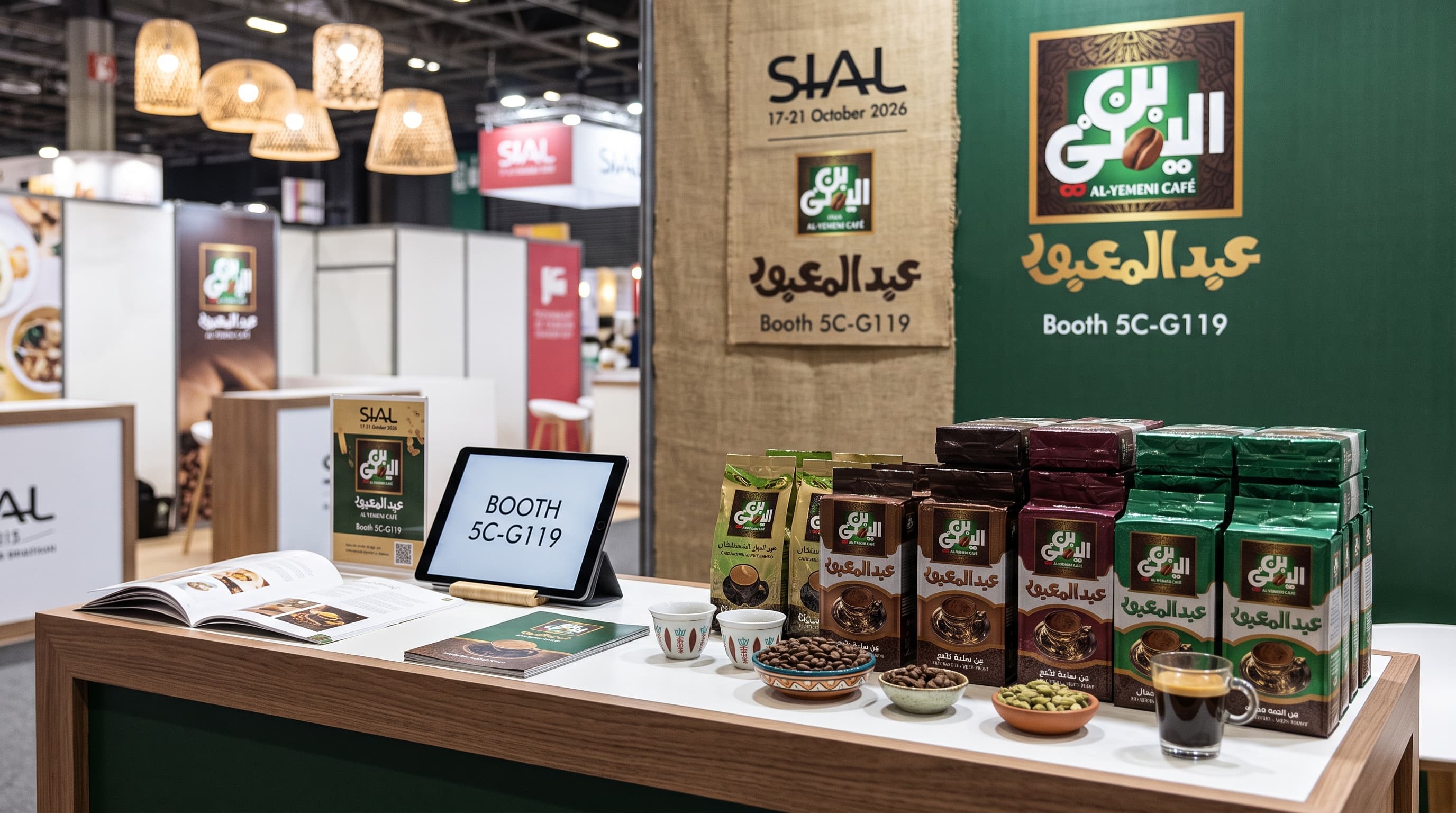
SIAL Paris Coffee Exhibitors: Meet Al-Yemeni Cafe Abdelmaboud at Stand 5C-G119
SIAL Paris Coffee Exhibitors: Meet Al-Yemeni Cafe Abdelmaboud at Stand 5C-G119
Paris Nord Villepinte hosts thousands of exhibitors, and buyers' schedules fill up quickly. Organizers expect nearly 8,000 exhibitors and close to 295,000 professionals between 17 and 21 October 2026. For category managers, importers and wholesale distributors, the useful question is which SIAL Paris coffee exhibitors can match the volumes, packaging and documentation their market requires. Al-Yemeni Cafe Abdelmaboud will be at stand 5C-G119.This guide covers what to discuss with our team, how to compare suppliers, and what to prepare before the meeting. It builds on our earlier guide to working with a commercial coffee roaster at SIAL Paris. Buyers considering an own-brand range can also read about working with a private label coffee manufacturer.What to Discuss at Stand 5C-G119Our team can walk you through our wide range of coffee products and the formats that suit your channel. The catalog covers:Plain coffee and Special Plain coffee in light, medium and dark roasts.10% cardamom coffee in the same three roasts, alongside Plus Cardamom, Extra Cardamom and Royal Cardamom lines.Espresso, roasted coffee beans, and Arabian and Emirati coffee.Product pages list a vacuum form for the packs. Ask the team about pack formats and sample availability for your market. If you want a profile of your own, our Tawleftak tool lets you choose the coffee type and the degree of roasting.How to Compare SIAL Paris Coffee ExhibitorsOrigin and route shape your landed cost and your stock turn. Egypt sits on the Mediterranean, so finished coffee shipped from an Egyptian Mediterranean port to a European port crosses a shorter sea distance than cargo that crosses an ocean. For a buyer, a shorter route can mean shorter planning cycles and smaller, more frequent orders, which ties up less cash in stock.Roasted coffee also begins to lose aroma once it is packed, so the time between roasting and shelf is worth asking about, and it helps to know how to keep coffee fresh in a commercial business once it arrives. Actual transit times depend on the carrier, the route and any transshipment, so confirm live schedules with your freight forwarder.Four questions help in any supplier meeting. Which products and pack formats fit my channel? Which quality documents can you provide for my market? How is the approved pre-shipment sample matched in later deliveries? Who sits between the plant and my warehouse, and what does that add to my cost? The last one is easier to answer when you compare buying direct from a manufacturer with buying through a distributor.Quality Documents and CertificationsListing a new supplier requires paperwork. We are recognized by Egypt's National Food Safety Authority and hold international quality certificates covering quality management, safety, occupational health and environmental management.Bring your audit checklist and ask which documents are available for your destination market. Requirements differ between retailers and countries, so a short list sent before the show saves time at the stand.Prepare for Your B2B MeetingBring the numbers that drive a quote:Volume and frequency: expected annual volume and how often you want deliveries.Branding: whether you plan to sell under your own brand, and the languages your labels need.Logistics: destination port, preferred Incoterm (for example FOB or CIF), and any pallet or warehouse constraints.Range: the roast levels, plain or cardamom lines, and formats you want to review.Our guide to choosing the right coffee supplier offers a broader checklist for the conversation.Plan Your VisitSIAL Paris is reserved for trade professionals, and registration is compulsory for entry. Tickets are personal and non-transferable. You can register for your visitor ticket on the official SIAL Paris platform.To arrange a time with our team during the show, contact us with your company details and estimated volumes. If Al-Yemeni Cafe Abdelmaboud is on your list of SIAL Paris coffee exhibitors, stand 5C-G119 is the place to start the conversation.
NaN day ago1 week agoblog.pagination.showing